Key Questions
...find out more


We're sure you will have many questions about laser eye surgery and whether it is the right option for you, however here we provide indepth details on the key questions we are asked most often.
For answers to other frequently asked questions about laser eye treatment please click here.
Our surgeon Mr Manoj Mathai, Ophthalmologist, CertLRS, MBBS, DO, MS, FRCS (Edinburgh) explains the causes of blurred vision in this video:
Normally the image of a distant object is focused onto the retina at the back of the eye by the cornea and the lens. The retina, in turn, converts this image into electrical impulses which the optic nerve transmits to the brain.
There are four main causes of blurred vision:
This means that you can see clearly close up but you may find that objects in the distance are blurred. In this case there will be a minus sign (-) in the ‘sphere’ part of your prescription. You will probably need to wear your glasses all the time or for many everyday activities including driving, watching TV or sports.
This means that close up objects (although sometimes objects in the distance too) may be out of focus. In this case there will be a plus sign (+) in the ‘sphere’ part of your prescription. You may need glasses for reading, using a computer, driving, watching TV or sports.
This occurs when the curvature of your eye is not perfectly round. In this case there will be numbers recorded in the ‘cylinder’ and ‘axis’ parts of your prescription. Your vision could be blurred at all distances and, depending on the amount of astigmatism, you may need to wear your glasses all the time.

Although laser treatment cannot correct presbyopia, allowances can be made for it by focusing one eye for distance vision and the other eye for near vision. This is known as monovision.
For many years the only way people could correct their vision was to wear glasses. However, wearers often complain of being able to see the frame, discomfort from daily wear and that their lenses steam up.
Over the last forty years contact lenses have become popular, although these also cause problems of their own for wearers. There is the daily routine of inserting, removing and cleaning the lenses, check-ups and collections. In addition, both spectacles and contact lenses can break or wear out, incurring costs for replacements.
More recently laser eye correction has been a major innovation in sight correction. Millions of people worldwide have now undergone laser eye correction and are enjoying the benefits.
If you would like to say goodbye to glasses or contact lenses, complete the form to book your appointment for laser eye surgery today.
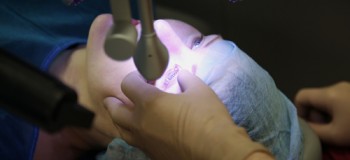
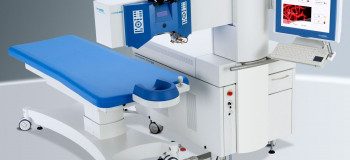
Lasers used in vision correction produce precise pulses of UV light energy which are delivered accurately onto the cornea. This energy weakens the bonds between atoms in the cornea so that microscopic amounts of tissue are removed in a process called cool ablation.
Since little or no heat is produced, no damage is done to the adjacent tissue allowing the computer guided laser to generate a new corneal profile as it sweeps back and forth across the eye.
Myopic eyes are given a flatter profile, hyperopic eyes are given a steeper profile and astigmatic eyes have their profile made more uniform.
Types of laser eye surgery:
LASIK treatment - laser in situ keratomileusis.
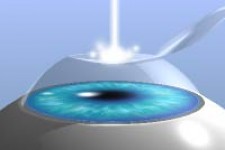
All-Laser LASIK, Bladeless LASIK, and Other Similar Terms:
When researching LASIK, you will find many different terms or brands are used to describe the same procedure. For example, All-Laser LASIK and Bladeless LASIK refer to the same type of LASIK procedure where no microkeratome (blade) is involved. Other names for the All-Laser LASIK procedure include brands such as: IntraLase or iLASIK® These are not different types of procedures; rather, these terms are brands of bladeless LASIK using a femtosecond laser to create the flap and an excimer laser to correct vision.
Benefits of All-Laser LASIK:
Femtosecond lasers allow surgeons to better customise the creation of the corneal flap for individual patients. The enhanced accuracy of the surgical process makes it possible to create flaps with an even thickness and structure. In doing so, there is less risk of a flap problem.
The precision of a femtosecond laser also allows surgeons to refine the corneal flap with optimal architecture. A bevelled edge enables the femtosecond flap to fit more securely in its original position at the end of the LASIK procedure. A more secure flap edge means faster healing for patients. The femtosecond laser also gives the LASIK surgeon more options in flap size, shape, and orientation, for a more customised LASIK procedure for each patient's needs.
SURFACE treatment
In a SURFACE treatment the surface layer of cells known as the epithelium are either displaced or removed and then the laser treatment is applied. These procedures are sometimes referred to as LASEK or TransPRK. A plain contact lens is put on the eye to help with the healing process until we remove it three/four days later. A surface treatment can be more uncomfortable post-operatively than LASIK but your visual outcome will be the same.
To determine your suitability for laser eye surgery we have created a quick survey which you can take by clicking here.
If, after completing the survey, it indicates that you could be suitable please contact the clinic and you will be invited to visit us for a thorough assessment and consultation.
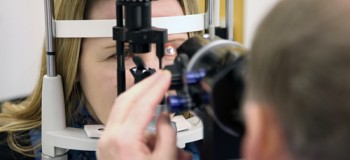
On arrival in reception you will be asked to complete a simple background questionnaire. The assessment part of the process is conducted by one of our experienced optometrists. Here we will check your prescription and take some very detailed measurements of the anatomy of your eyes. The optometrist will measure your pupil size, your corneal thickness and will also take some images of the front surface of your eyes. It is this information that will allow the ophthalmologist to decide if you are suitable.
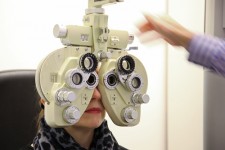
Please use this valuable time with your doctor to ask any questions you may have. There is no pressure at all for you to make a decision there and then. The purpose of the assessment and consultation is purely to determine your suitability so you can make an informed choice if you want to go ahead. We take no deposits from you and you will receive no follow up ‘sales’ calls.
You may be suitable for more than one type of treatment, which your ophthalmologist will discuss with you.
Our optometrist Angela Critchley explains in this video what conditions may prevent you from having laser eye surgery:
The table below provides a direct comparison between LASIK and SURFACE laser eye treatments, however your surgeon will discuss these with you so you can decide which course of treatment is best for you.
If you are between 40 - 45 years of age (or older) and wear glasses for distance, you may have started to need help for reading / near vision too. This is usually addressed by changing your single vision spectacle lenses to bifocal lenses or varifocal lenses.
If you don’t or have never worn distance glasses, by the time you reach 40 -45 years of age (or older) you will still develop the need for reading / near vision glasses as this is due to the natural ageing of your eyes and this condition is referred to as presbyopia.
For patients in this age category who are considering laser eye treatment, and who want independence from both distance & reading glasses, the only viable option is monovision.
Monovision is the situation where the focus of one eye is set for distance and the focus of the other eye for near. This is a strategy for reducing dependence on reading spectacles whilst not overly compromising distance vision.
In the youthful eye there is a natural ability to adjust focus from distance to near. This is gradually lost with advancing years. In children and young adults the natural lens within the eye is very pliable and a muscle acts upon it to change its shape. As the lens changes shape so the focus of the eye is altered. This is why young children and young adults, who can see clearly in the far distance, can also see clearly just inches from their nose.
Unfortunately the lens becomes stiffer with ageing and, although the muscle still works, it is less able to modify the lens shape. By mid forties the focusing reserve of the eye has diminished so that when tired or in poor light, clear near vision cannot be achieved or sustained and near vision spectacles become necessary.
This declining focus adjustment of the eye is called “loss of accommodation”, and the age related inability to see at near is called “presbyopia”. Science has not yet come up with a way of truly restoring the youthful focus adjustment to the eye.
Monovision is a way of overcoming this problem. It is a compromise. A deliberate difference is created between the two eyes. One eye has clear distance vision whilst the other eye has clear near vision. Some individuals adapt to this and some do not. Monovision “works” when the individual is unaware of the difference between the eyes and just attends to the image that is in best focus.
As gaze changes from distance to near the brain must flip from attending to the image from one eye to that of the other. The person lives with both eyes open and sees with whichever eye has clearer vision. Of course the eye that is a little out of focus is still contributing to vision. How long it takes to get used to this new way of seeing varies from one person to another. Some people take to it almost immediately but others never seem to be able to overcome the awareness that one eye is blurred.
Monovision can deliver social independence from reading spectacles. By this I mean the ability to see mobile phones, your wristwatch, shop prices and restaurant menus. It is rarely as good as near vision with spectacles. This is because with reading glasses both eyes are being used to read and with the full correction. With monovision only one eye is in focus for near and usually the correction is toned down a bit to avoid creating too great a difference between the eyes.
Monovision may not give total independence from spectacles. There may be some situations where it is preferable to have the eyes in synchronous focus. One example is driving at night. With monovision one eye will have blurred distance vision. Oncoming headlights will form starburst images in that eye which may be distracting. The solution is to use spectacles that refocus that eye for distance. When reading challengingly small print for extended periods spectacles may provide more acceptable near vision.
The important thing to understand when deciding if monovision is for you, is to accept that you may not have perfect distance vision AND perfect near vision. It is a compromise. Patients who adapt best are the ones who have a realistic expectation of the outcome. For most, monovision gives them independence from distance and near glasses for the vast majority of the time, however they accept that visual aids may be required for challenging distance and near tasks.
As you continue to get older, your near vision will continue to diminish so you need to think of monovision as turning the hands back on a clock…we can re-set you, but we can’t stop the clock ticking…. However, the benefit you achieve from monovision will always be in “the bank” so even if you do require additional assistance for near vision in the years to come, the benefit of your monovision will still provide a degree of independence.
If laser treatment is being considered, it is wise to discuss this with your ophthalmologist at your consultation and to have a contact lens trial of monovision first to be sure that you can adapt to it. We can arrange this for you with our contact lens practitioner.
Monovision can be achieved with using the LASIK and the surface treatment methods of refractive surgery.
Footnotes:
The video below from our experienced laser eye surgeon Dr Stephen Doyle, Ophthalmologist, MBBS, BSc (Hons), MRCOphth explains why laser eye surgery is a safe procedure: